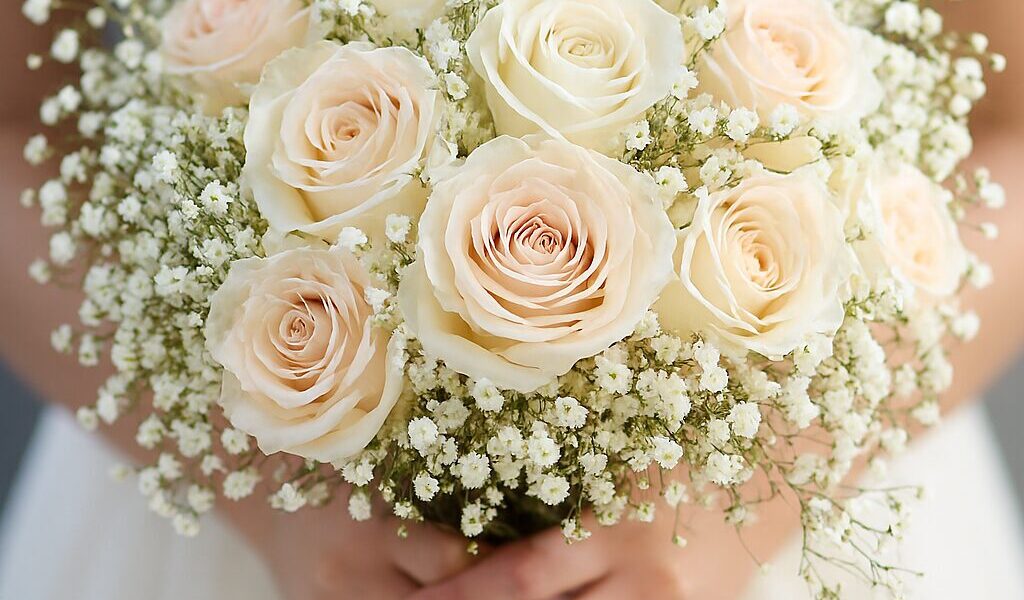
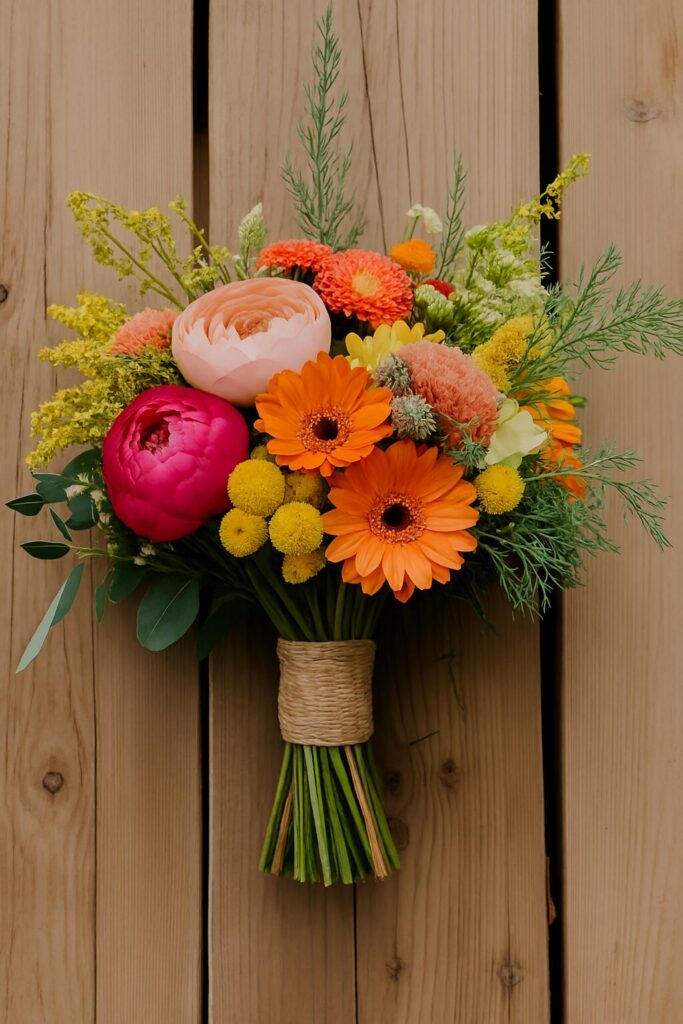
A wedding bouquet is more than just a handful of flowers—it’s a statement piece that reflects your style, complements your dress, and adds an unforgettable touch to your wedding photos. On your special day, your bouquet will be with you from the walk down the aisle to the last dance, so choosing the right one matters.
From timeless roses to whimsical wildflowers, from classic round shapes to bold cascading designs, there’s a perfect bouquet for every bride. In this guide, we’ll explore everything you need to know about choosing your dream wedding bouquet—including popular styles, seasonal flower tips, personalization ideas, and trending designs.
The Meaning Behind Wedding Bouquets
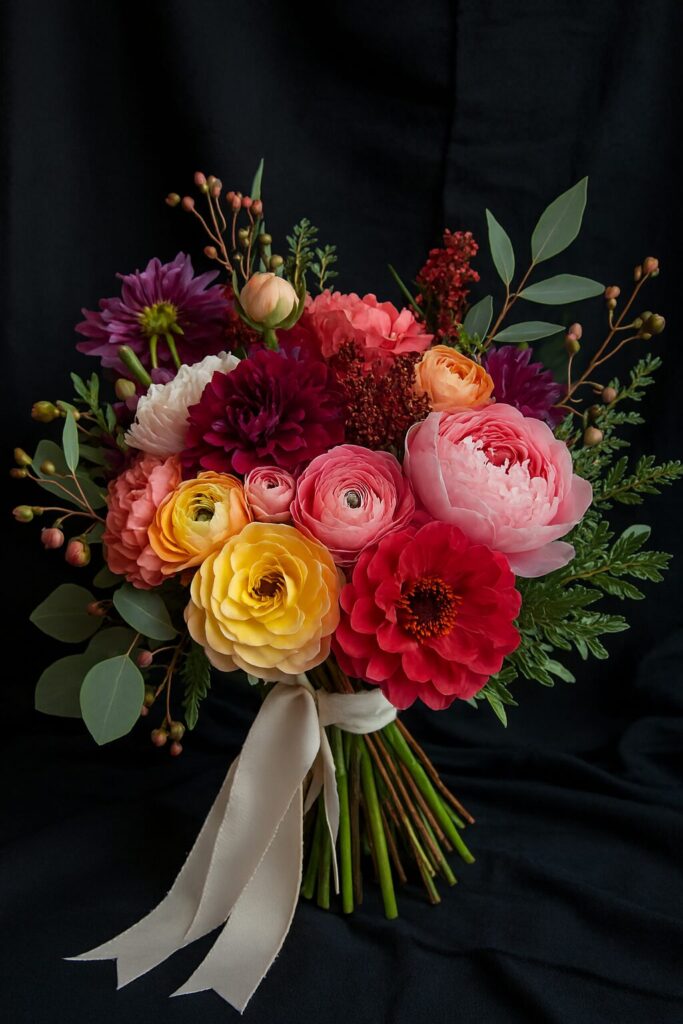
The tradition of carrying flowers dates back centuries. In ancient times, brides carried herbs and blooms to symbolize happiness, fertility, and protection. Over time, fragrant flowers replaced herbs, adding elegance and beauty to the tradition.
Even today, flowers still carry symbolic meanings:
- Roses – Love, romance, and passion
- Lilies – Purity and commitment
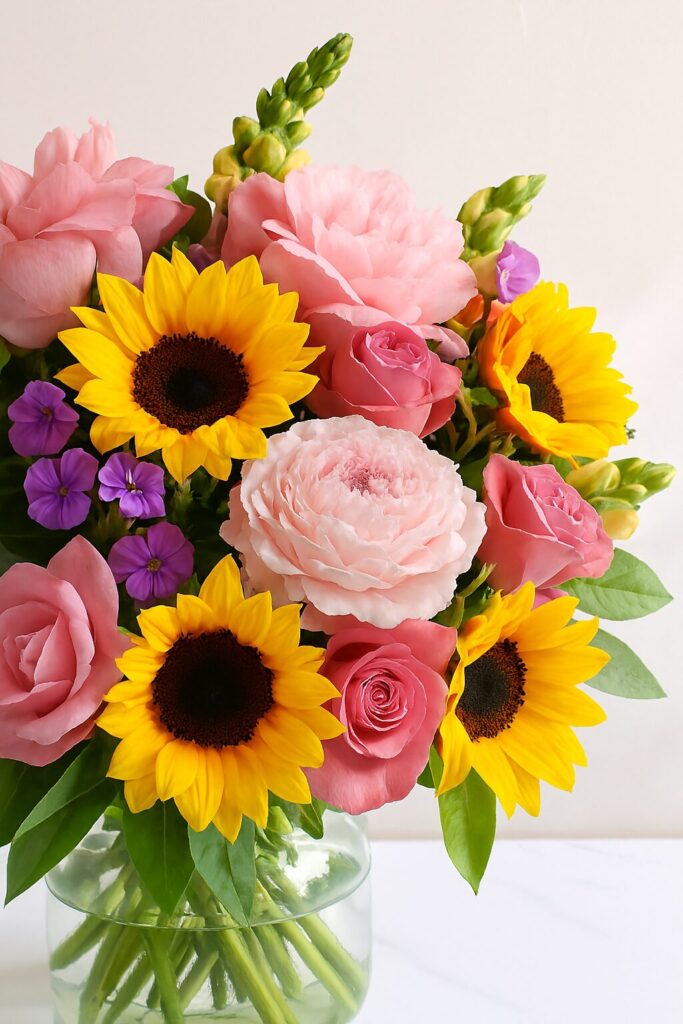
- Sunflowers – Loyalty and joy
- Peonies – Prosperity and happy marriage
- Orchids – Beauty, luxury, and strength
By understanding flower symbolism, you can choose blooms that represent your relationship and values, making your bouquet even more meaningful.
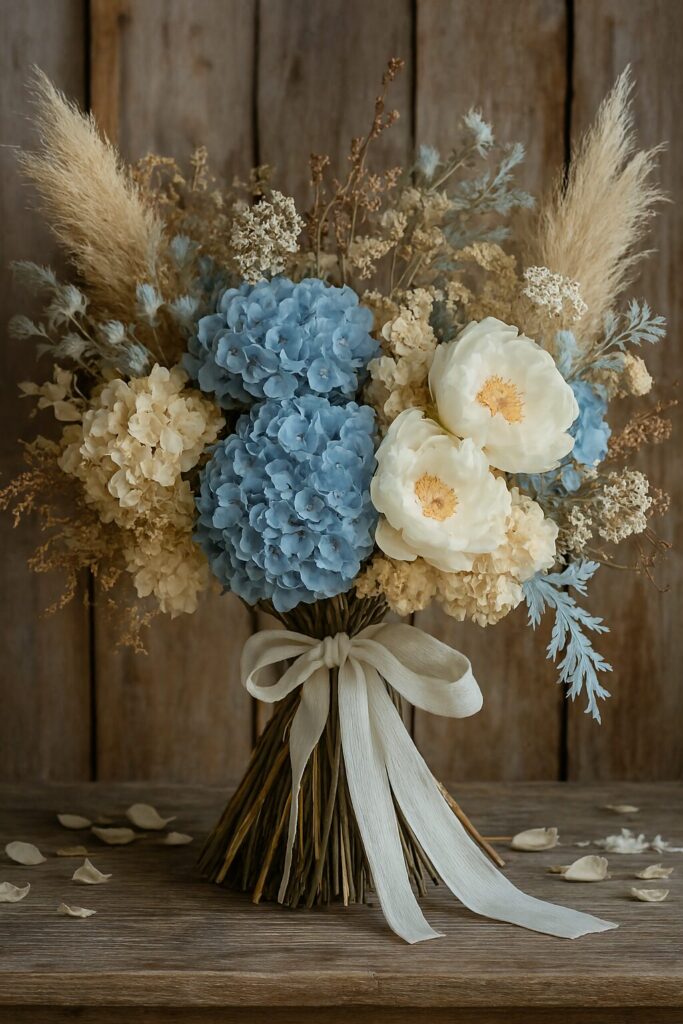
Popular Wedding Bouquet Styles
Choosing a bouquet style is just as important as picking the flowers themselves. The shape, size, and arrangement should complement your dress and overall wedding theme.
1. Round Bouquet
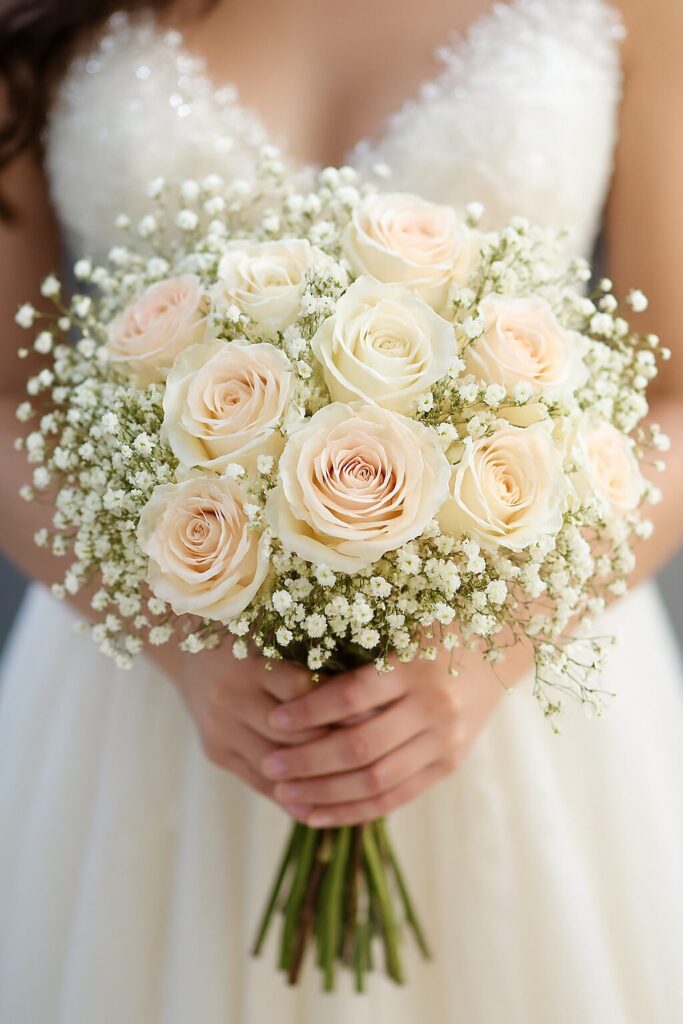
A classic favorite, the round bouquet features flowers arranged in a symmetrical dome shape. Popular blooms for this style include roses, ranunculus, and peonies. It’s perfect for traditional and modern weddings alike.
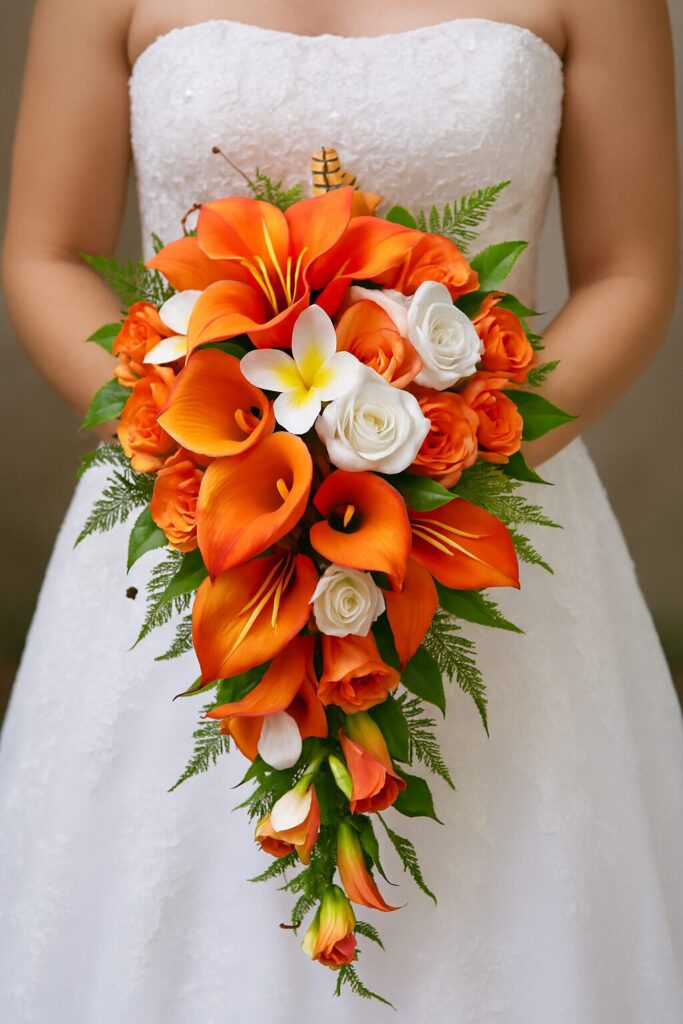
2. Cascade Bouquet
Also called a “waterfall bouquet,” this style allows flowers and greenery to flow gracefully downward. Orchids, ivy, amaranthus, and calla lilies work beautifully here. It’s a dramatic choice that pairs well with elegant, formal gowns.
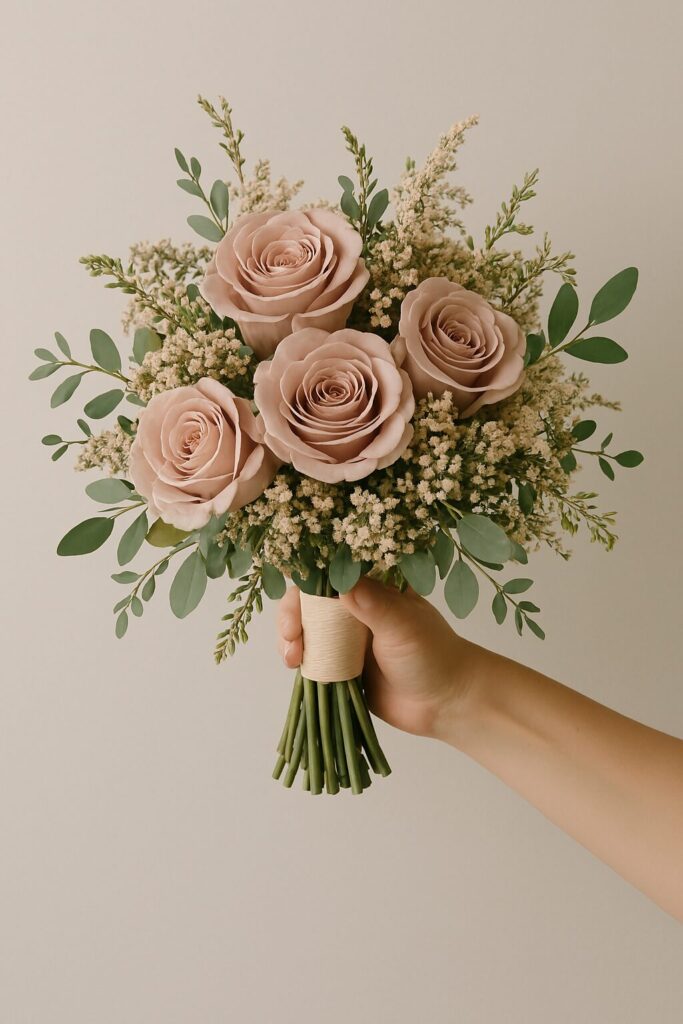
3. Hand-Tied Bouquet
Casual yet beautiful, the hand-tied bouquet has a natural, just-picked feel. Stems are bound with ribbon or twine, often showcasing seasonal flowers and greenery. Ideal for rustic or bohemian weddings.
4. Posy Bouquet
Small and lightweight, the posy bouquet is easy to hold and perfect for minimalist brides or bridesmaids. Often made with one or two flower types, it’s neat, tidy, and charming.
5. Presentation Bouquet
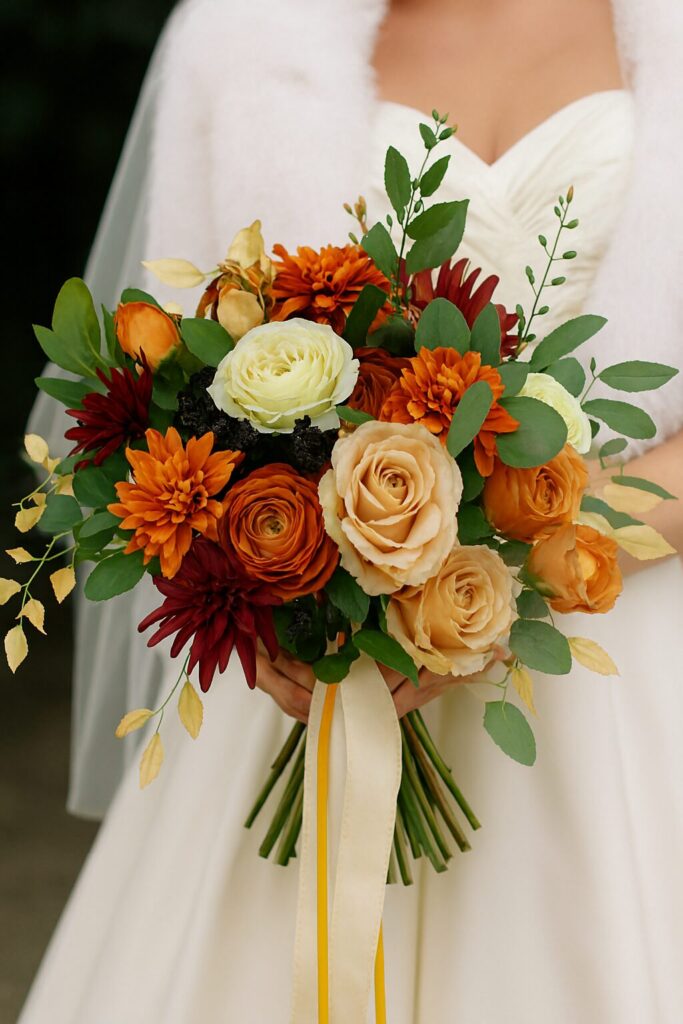
This long-stemmed bouquet is carried in the crook of your arm, like a pageant winner’s flowers. Perfect for sleek, modern bridal looks.
6. Composite Bouquet
A rare and artistic style where petals are arranged to look like one giant bloom. This unique bouquet is sure to make a statement.
Choosing Flowers by Season
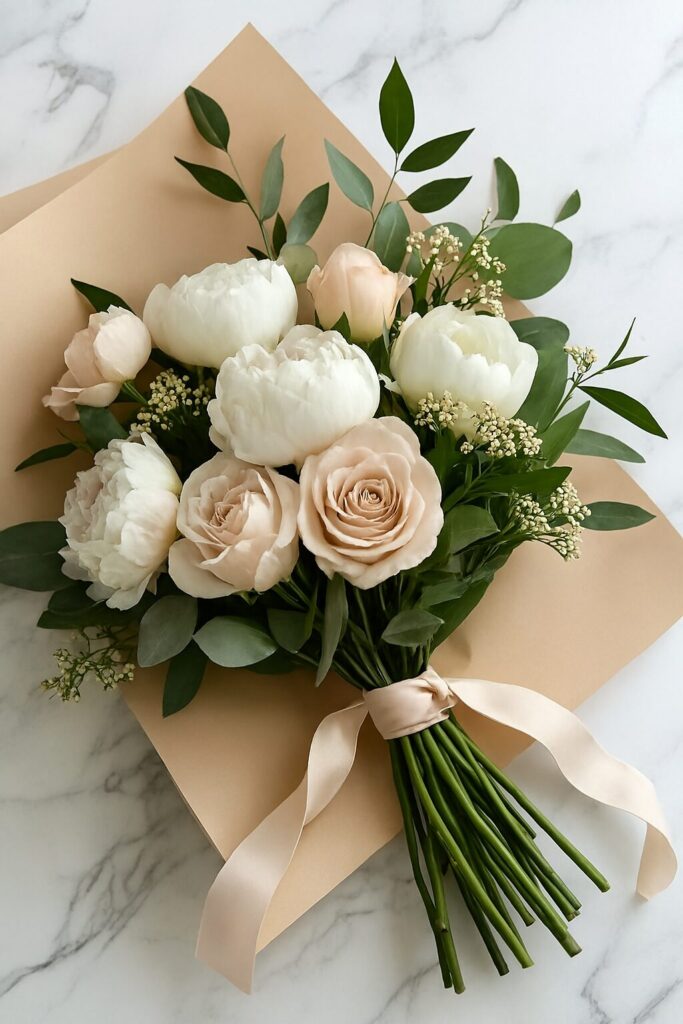
Opting for seasonal blooms ensures your bouquet is fresh, readily available, and often more affordable.
Spring Wedding Bouquets
- Peonies
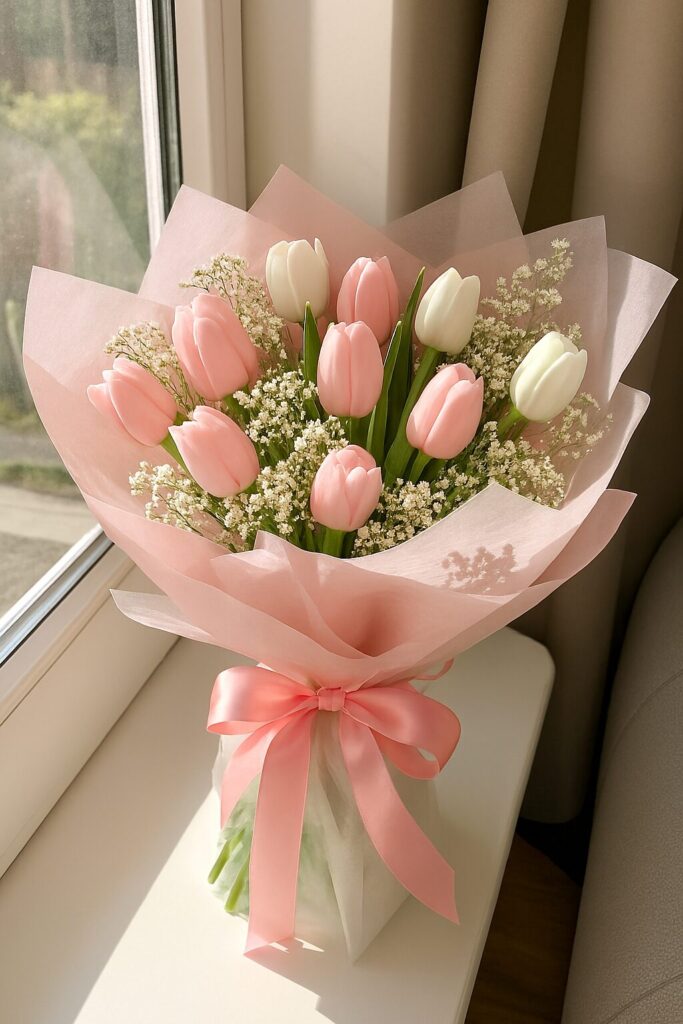
- Tulips
- Daffodils
- Sweet peas
- Hyacinths
Spring bouquets are soft and romantic, often featuring pastel colors and delicate textures.
Summer Wedding Bouquets
- Roses
- Sunflowers
- Dahlias
- Zinnias
- Hydrangeas
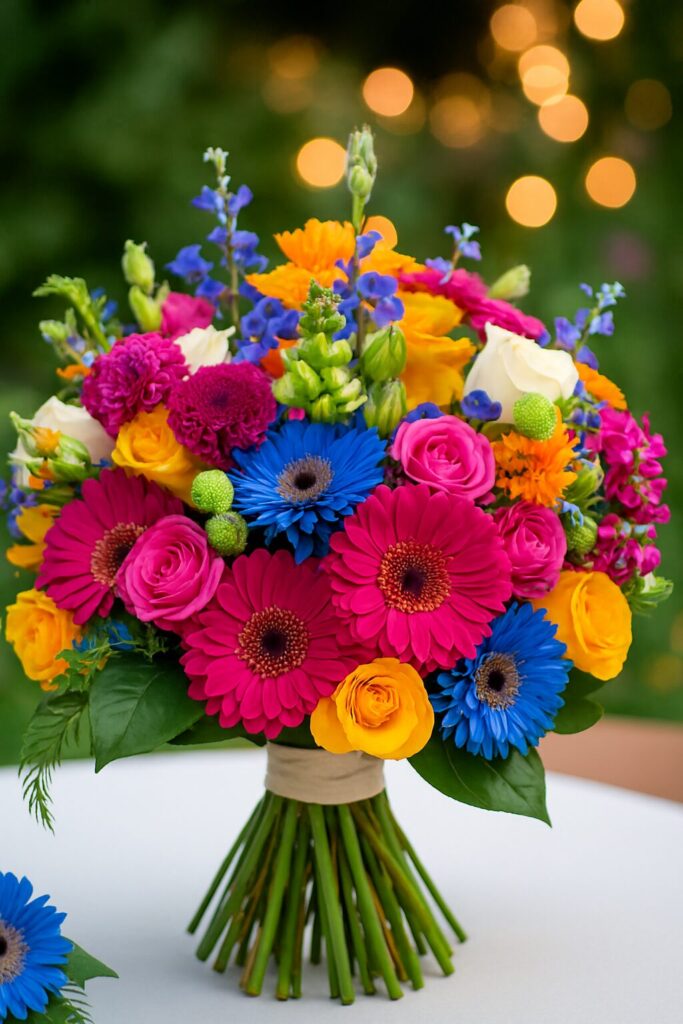
Summer bouquets can be bold and vibrant, with lush blooms and greenery.
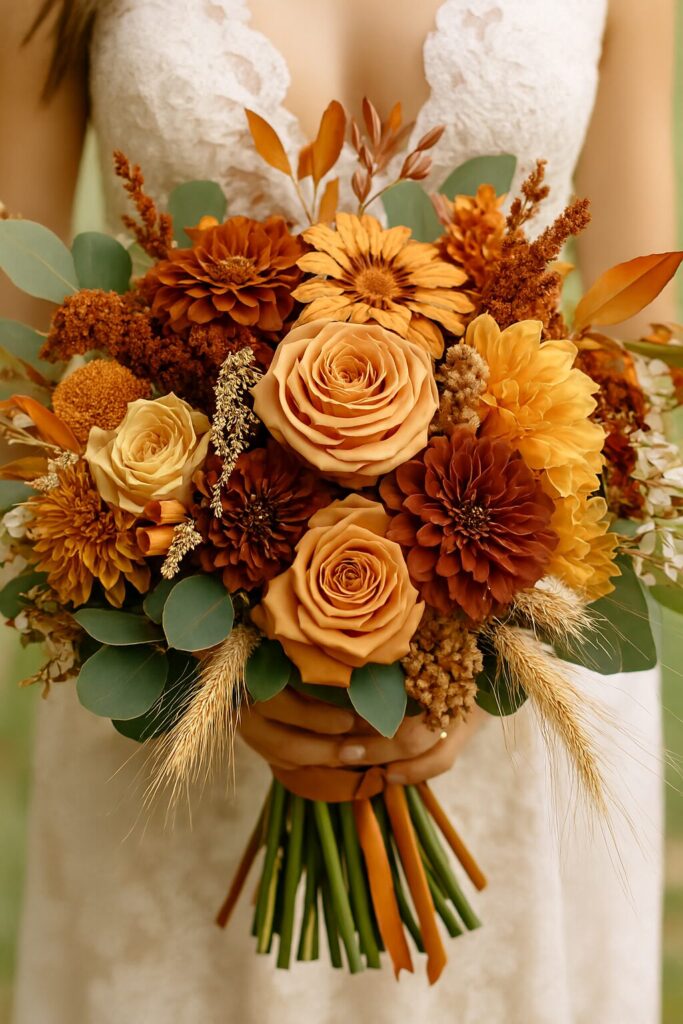
Autumn Wedding Bouquets
- Chrysanthemums
- Marigolds
- Calla lilies
- Dahlias
- Amaranthus
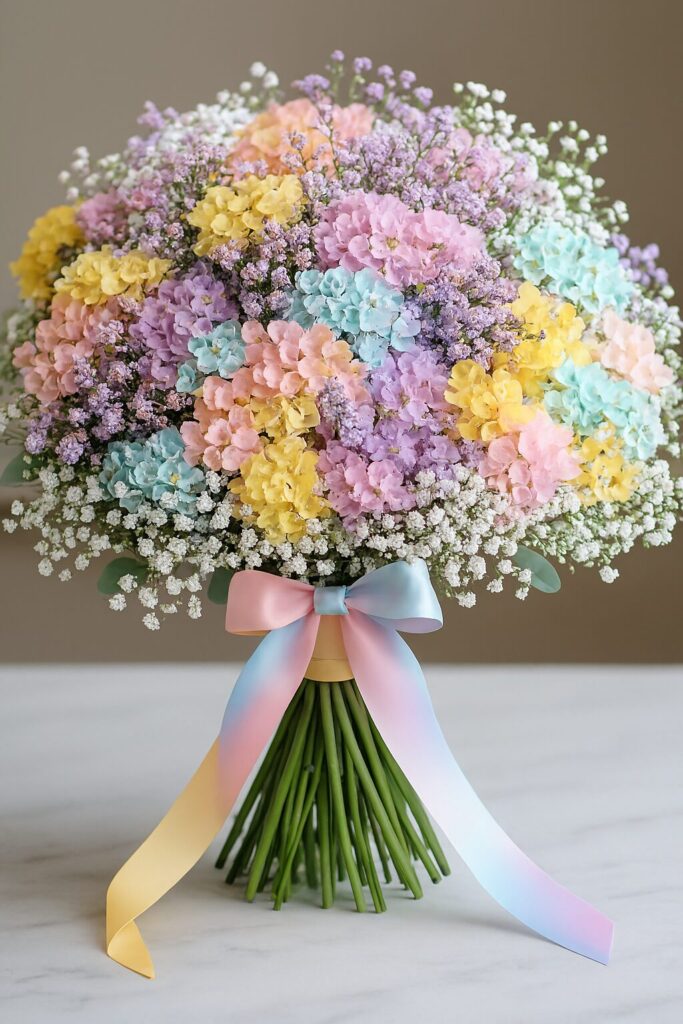
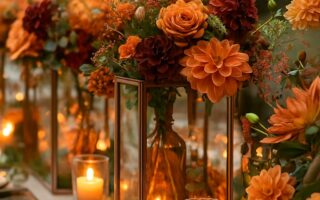
Fall bouquets feature deep jewel tones like burgundy, orange, and mustard.
Winter Wedding Bouquets
- Amaryllis
- Camellias
- Evergreens
- Anemones
- Poinsettias
Winter bouquets often include pinecones, berries, and metallic accents for a festive touch.
Matching Your Bouquet to Your Wedding Theme
The bouquet should enhance your overall wedding aesthetic:
- Romantic: Soft pinks, creams, and blush blooms with delicate ribbons.
- Rustic: Wildflowers, lavender, eucalyptus, and loose arrangements.
- Modern: Monochrome designs, bold color contrasts, and minimal greenery.
- Beach: Tropical flowers like hibiscus, orchids, and palm leaves.
- Vintage: Muted tones with lace or velvet ribbon wraps and antique brooches.
Personalizing Your Wedding Bouquet
Your bouquet is a chance to make your wedding even more personal. Consider:
- Wrapping stems with fabric from your mother’s or grandmother’s dress
- Adding lockets or charms with photos of loved ones
- Including flowers that have special meaning to you as a couple
- Choosing blooms from the place you first met or got engaged
Bridal Bouquet Trends for 2025
Florists are predicting some gorgeous trends for this year:
- Monochrome Bouquets: One color in multiple shades for a sophisticated look
- Mixed Fresh & Dried Flowers: Combining pampas grass, preserved roses, and fresh blooms
- Oversized Designs: Extra-large, lush bouquets for dramatic photos
- Unique Textures: Adding berries, feathers, succulents, or fruit for interest
Caring for Your Bouquet on the Big Day
To keep your bouquet fresh and beautiful:
- Keep it in water until the last possible moment.
- Store it in a cool, shaded area before the ceremony.
- Mist lightly with water to prevent wilting.
- Ask your florist to deliver it close to your ceremony start time.
Preserving Your Wedding Bouquet
If you want to keep your bouquet after the wedding, try these methods:
- Air Drying: Hang the bouquet upside down in a dark, dry room.
- Pressing: Flatten blooms in a heavy book for framing later.
- Silica Gel Drying: Retains color and shape well.
- Professional Preservation: Turn your bouquet into resin art, jewelry, or a shadow box.
How Much Does a Wedding Bouquet Cost?
Prices vary depending on the flowers, size, and location. On average:
- Bridal Bouquets: $150–$350
- Bridesmaid Bouquets: $60–$120
Seasonal flowers usually cost less, while exotic blooms or custom designs may cost more.
Final Thoughts
Your bouquet is more than just a pretty accessory—it’s a piece of your wedding day story. By considering your dress style, wedding theme, season, and personal touches, you can create a bouquet that not only looks stunning but also holds deep meaning.
When you walk down the aisle holding flowers chosen with love, every photo and memory will be that much more beautiful.